
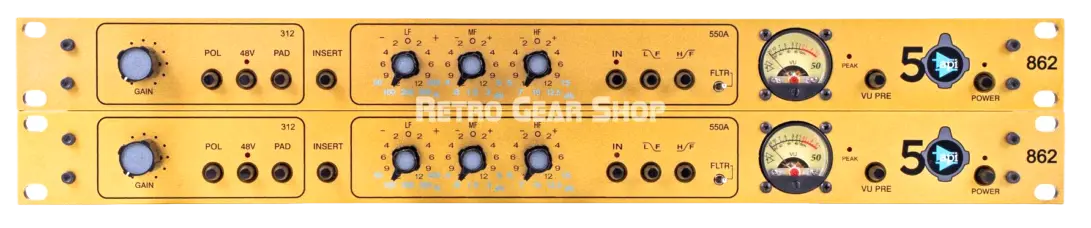
An audio channel strip is a signal-processing chain that combines several essential audio tools into one unit—either as a physical hardware device or a software plugin—used to shape and control a single audio signal (like a vocal, guitar, or microphone input).
Think of it as everything you need for one audio channel in one place.
🎛 What’s Usually Inside a Channel Strip?
A typical channel strip includes:
1️⃣ Preamplifier (Preamp)
-
Boosts low-level signals (like from a microphone) to usable levels.
-
Often adds character (clean, warm, vintage, etc.).
2️⃣ Equalizer (EQ)
-
Adjusts frequency balance.
-
Boosts or cuts bass, mids, highs.
3️⃣ Compressor
-
Controls dynamic range.
-
Reduces loud peaks and evens out volume.
4️⃣ Optional Extras
-
Gate/Expander – Reduces background noise.
-
De-esser – Tames harsh “S” sounds in vocals.
-
Saturation – Adds harmonic warmth.
-
High-pass filter – Removes low rumble.
🎚 Hardware vs Software
🔹 Hardware Channel Strip
A physical rack unit used in studios.
Example:
-
Universal Audio channel strips like the 6176.
Used before the signal enters the audio interface.
🔹 Software Channel Strip (Plugin)
A digital version inside a DAW (Digital Audio Workstation).
Examples:
-
Waves Audio SSL Channel
-
FabFilter Pro Channel plugins
Used during recording or mixing.
🎵 Why Use a Channel Strip?
-
Saves time (all tools in one plugin)
-
Keeps workflow organized
-
Emulates classic studio consoles
-
Provides cohesive sound shaping
🧠 Simple Example (Vocal Recording)
-
Mic → Preamp (boost signal)
-
EQ → Remove muddiness
-
Compressor → Even out volume
-
De-esser → Smooth harsh S sounds
All done within one channel strip.
-

Mastering to
$80.00 Add to cart -

Best plugins for mastering
$80.00 Add to cart -

Plugins for mastering
$80.00 Add to cart -
Audio mastering plugin
$80.00 Add to cart -
Mastering plugins
$80.00 Add to cart -
Online music mastering
$80.00 Add to cart -
Mastering engineer pearson
$80.00 Add to cart -
Mastering equalizer
$80.00 Add to cart
-