




Mastering engineering is the final stage of audio production where a mastering engineer prepares a finished mix for release. Their job is to make the music sound polished, balanced, and consistent across different playback systems (headphones, cars, speakers, streaming platforms, etc.).
A mastering engineer typically:
- Balances the overall sound — adjusts frequency balance (bass, mids, treble) so the track sounds clear and natural.
- Controls dynamics — uses compression, limiting, and other tools to manage loudness while keeping the music expressive.
- Improves stereo image — fine-tunes the width and placement of sounds.
- Fixes technical issues — removes unwanted noise, clicks, distortion, or frequency problems.
- Sets final loudness levels — ensures the track meets delivery standards for formats like streaming, CD, vinyl, or broadcast.
- Sequences an album or EP — decides track order, spacing between songs, and overall flow.
- Creates the final master files — the versions sent to distributors, pressing plants, or streaming services.
The distinction between mixing and mastering is:
- Mixing: Balances the individual tracks (vocals, drums, guitars, synths, etc.) within a song.
- Mastering: Works on the final stereo (or surround) mix as a whole and prepares it for public release.
-

Royal Compressor
$95.00 Add to cart -

Bettermaker Mastering Compressor
$95.00 Add to cart -
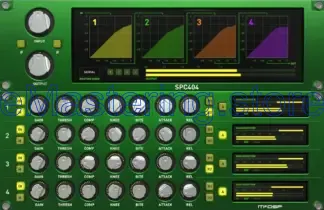
McDSP SPC2000 Serial/Parallel Compressor
$95.00 Add to cart -

Shadow Hills OptoMax
$95.00 Add to cart -

Empirical Labs Mike-E Comp
$95.00 Add to cart -

Precision Buss Compressor
$95.00 Add to cart -

Neve 33609SE
$95.00 Add to cart -

Uaudio 176
$95.00 Add to cart